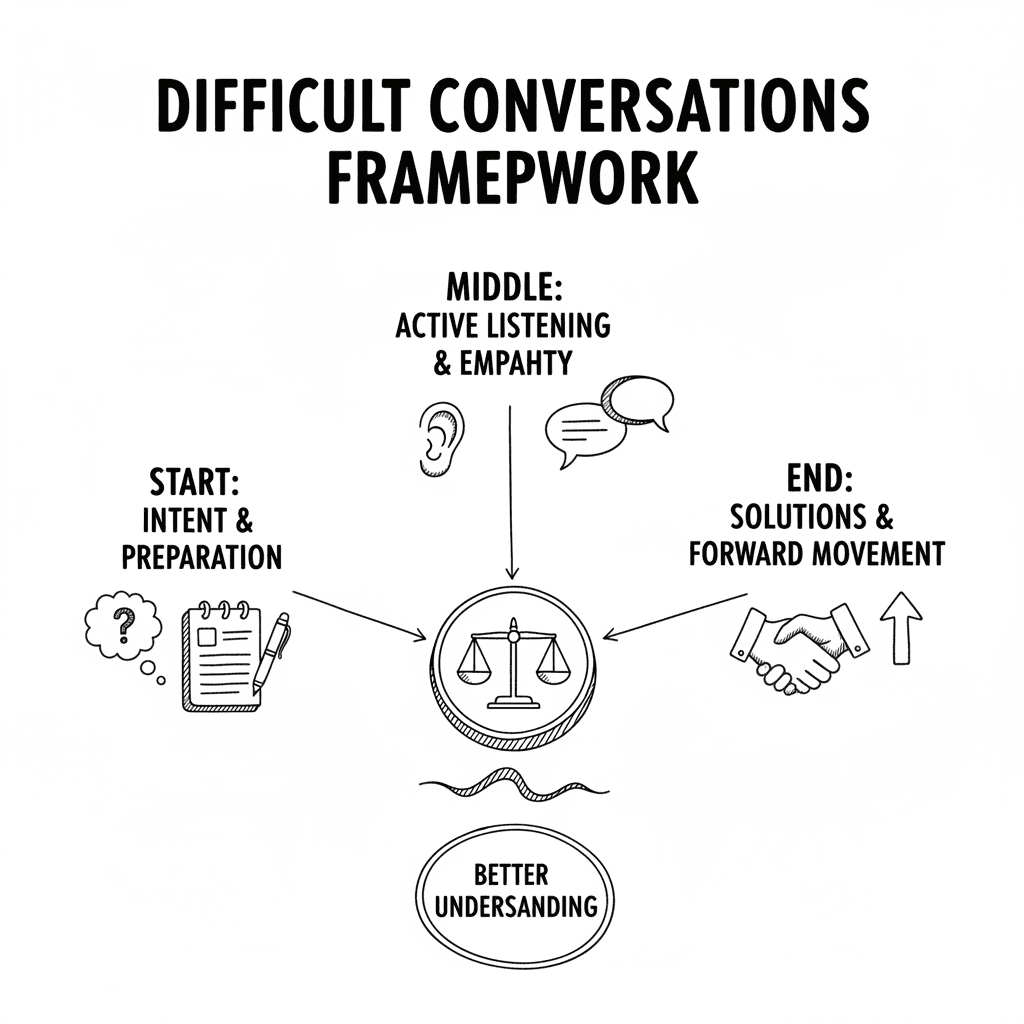
Mastering the Difficult Conversations Framework: Essential Guide for Team Leaders
October 15, 2023 • 9 min read
Introduction
Navigating difficult conversations is an essential skill for anyone in a leadership or management position, especially in today's world where remote work blurs the lines of communication. These conversations can either strengthen team cohesion or create rifts if not handled effectively. This article unpacks a structured framework to help you conduct challenging discussions with confidence and empathy.
What is the Difficult Conversations Framework and Why Does it Matter?
The Difficult Conversations Framework is a structured approach that aids individuals in navigating sensitive and potentially uncomfortable discussions. It encourages clear communication and empathetic listening, helping all parties involved feel respected and understood. For team leads and HR managers, mastering this framework can lead to a healthier work environment and more cohesive teams, promoting productivity and mutual understanding.
Practical Strategies to Implement the Framework
1. Preparation is Key
Begin by preparing adequately. Outline the points you need to discuss and anticipate potential responses or objections. This step ensures clarity and demonstrates respect for the other party's time and perspective.
2. Set a Productive Tone
Start the conversation with a positive and open mindset. Acknowledge the difficulty of the conversation but also emphasize the importance of addressing the issue constructively. This can be fostered by setting ground rules for mutual respect.
3. Active Listening
Engage in active listening by giving your full attention and validating the other person's feelings. Avoid interrupting and consider repeating back what you've heard to ensure understanding and show empathy.
4. Seek Solutions, Not Blame
Shift the focus from assigning blame to collaboratively finding solutions. This encourages teamwork and innovation, transforming a potentially divisive conversation into an opportunity for growth and learning.
Common Pitfalls to Avoid
1. Emotional Hijacking
Allowing emotions to take control during a conversation can quickly derail it. It's crucial to maintain composure and approach the discussion with a calm and collected mindset.
2. Assumptions without Confirmation
Avoid making assumptions about the other person's motives or feelings. Always seek clarification to prevent misunderstandings that can escalate tensions.
3. Avoiding the Conversation
Ignoring difficult conversations can lead to unresolved issues that compound over time. It's vital to address issues head-on but with empathy and a clear strategy.
Conclusion
Implementing a difficult conversations framework can profoundly impact team dynamics, enhance communication, and foster a positive workplace culture. By equipping yourself with these strategies, you not only grow as a leader but also empower your team to navigate challenges more effectively. With practice and commitment, difficult conversations can transform from daunting tasks to opportunities for connection and improvement.
Ready to Break the Ice?
Take your team meetings to the next level with our premium Icebreaker Bingo Kit. Generate unlimited, custom-branded bingo cards in seconds.
Instant access • No subscription required