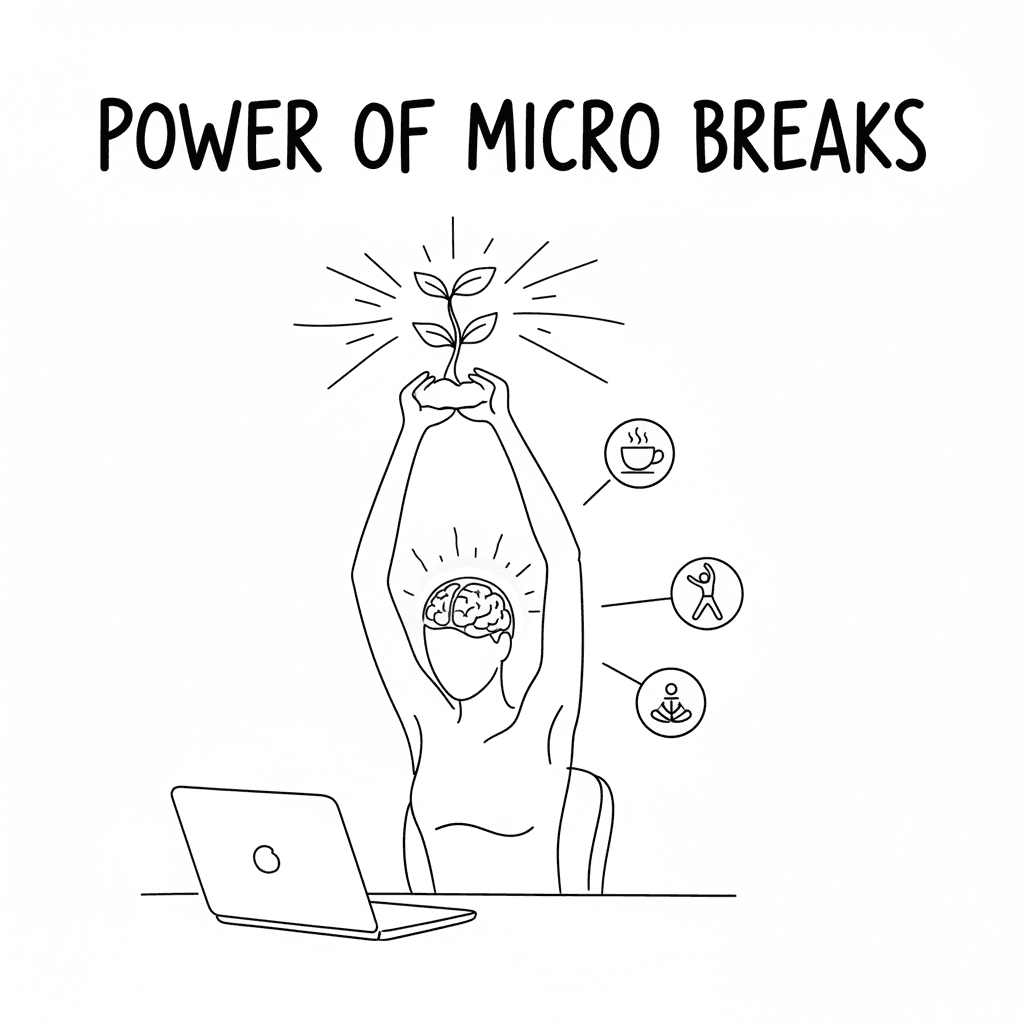
In today’s fast-paced work environment, it's easy for team leads, HR managers, and remote workers to overlook the benefits of taking short breaks. Yet, research shows that these "micro breaks" can lead to substantial productivity and morale improvements. Let's delve into how you can leverage micro breaks to foster a more dynamic and efficient work culture.
What Are Micro Breaks and Why Are They Important?
Micro breaks are short, intentional pauses lasting anywhere from 30 seconds to five minutes, typically taken throughout the workday. These breaks are essential for preventing burnout, reducing eye strain, and refreshing the mind, enabling employees to maintain high levels of productivity and creativity.
Studies suggest that engaging in micro breaks can boost mood, concentration, and overall mental health. For remote workers, especially, these breaks can help delineate work time from personal time, maintaining a healthy work-life balance.
Practical Strategies and Activities for Effective Micro Breaks
1. Stretch and Move
Encourage your teams to take regular stretch breaks. Simple movements like reaching for the sky or walking around the room can drastically reduce physical tension and invigorate the mind.
2. Mindfulness and Breathing Exercises
Implement short mindfulness sessions. Even a minute of focused breathing can help clear the mind. Apps like Headspace or Calm offer guided sessions that are perfect for micro breaks.
3. Social Connections
Foster short social interactions. A quick chat over instant messages or a brief, casual video call can recreate the ‘water cooler’ moments of traditional office environments, strengthening team bonds.
4. Visual Relaxation
Encourage employees to look away from screens. Gazing outside or at distant objects can reduce eye strain. Providing virtual nature tours or simple slideshows of calming imagery can help soothe visual fatigue.
5. Creative Breaks
Incorporate short, creative activities like doodling or listening to music. These activities can spark creativity and provide mental refreshment, leading to more innovative problem-solving.
Common Pitfalls to Avoid
While integrating micro breaks, be wary of some common pitfalls:
Interrupting Workflow
Ensure that breaks do not interrupt the flow of work. Schedule them at natural stopping points, like at the end of a task or during transitions.
Over-scheduling Breaks
Balance is key. Too many breaks can disrupt productivity, so it's essential to find the right frequency that supports, rather than hinders, workflow.
Ignoring Personal Preferences
Recognize that different team members might have distinct preferences for how they take breaks. Allow individuals the flexibility to choose break activities that best suit their needs.
Conclusion
Implementing micro breaks within your team can lead to a healthier, more productive work environment. By actively promoting these short pauses, you can help your team recharge mentally and physically, leading to enhanced creativity and productivity. Embrace these strategies today to witness a transformative impact on your work culture.