15 Engaging Team Building Activities for Students (Elementary to High School)
Move beyond simple icebreakers. These team building activities are designed to foster deep collaboration, problem-solving skills, and trust among students of all ages.
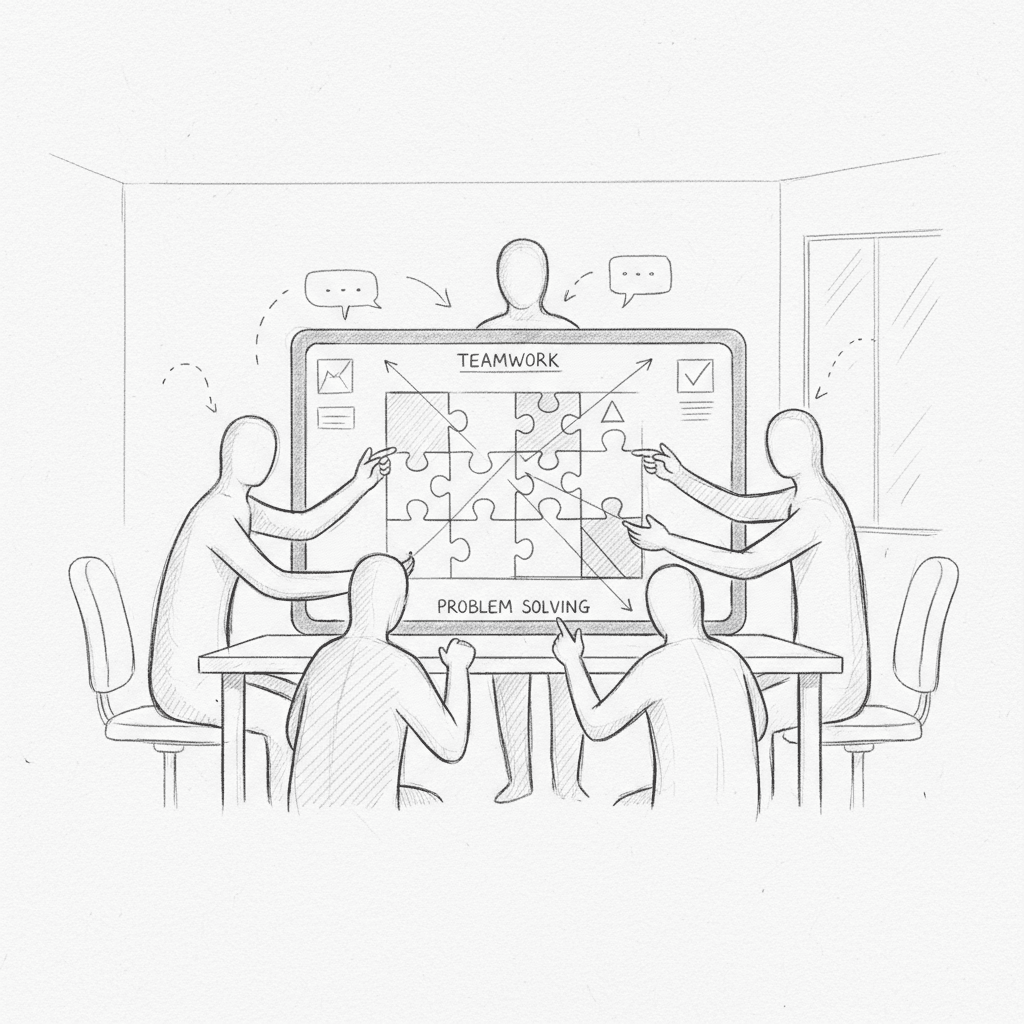
More Than Just Fun and Games
While icebreaker games are excellent for initial introductions, team building activities go a step further. They require students to work together towards a common goal, solve complex problems, and rely on one another.
Effective team building in the classroom develops essential "soft skills" that textbooks can't teach:
- Communication: Learning to listen and express ideas clearly.
- Conflict Resolution: Navigating disagreements constructively.
- Critical Thinking: Analyzing problems from multiple angles.
- Empathy: Understanding peers' strengths and struggles.
Elementary School: Building Foundations
Simple, high-energy activities that teach cooperation.
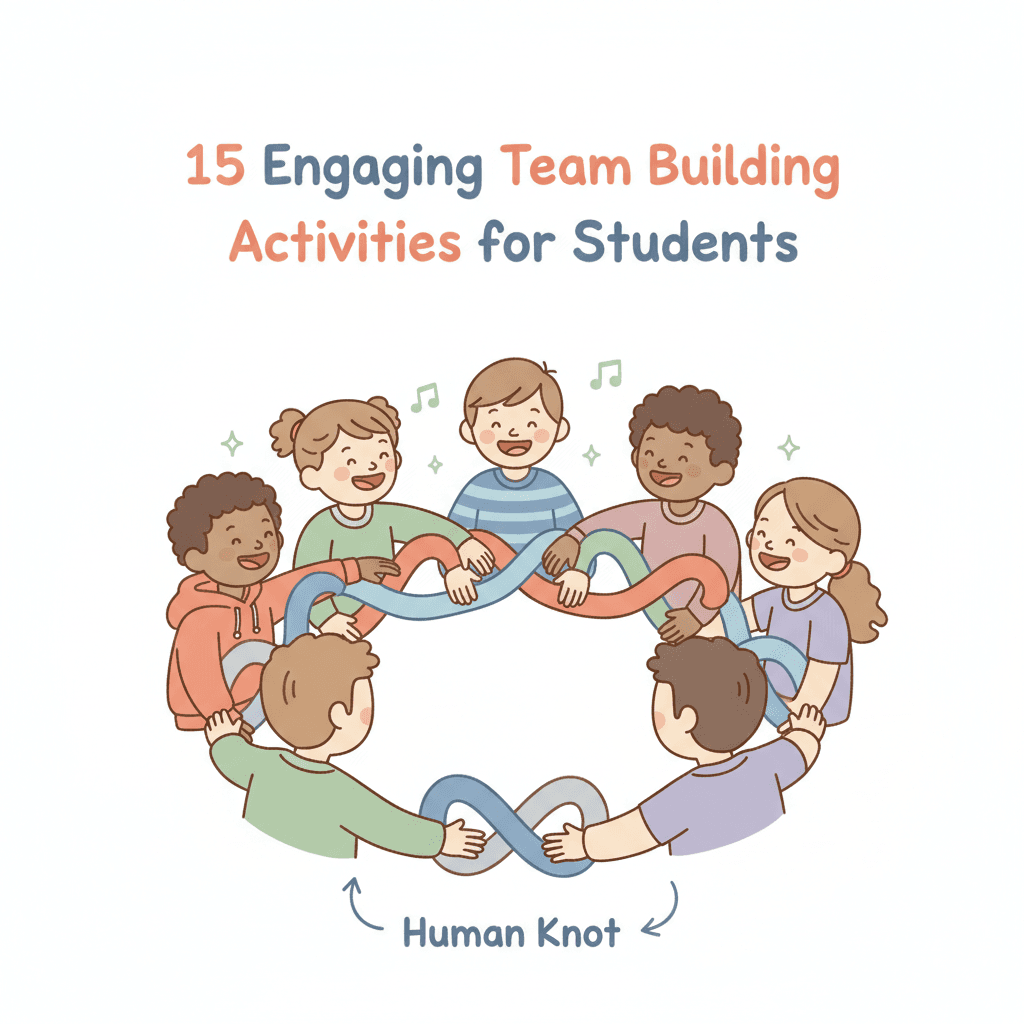
1. The Human Knot
The Goal: Untangle the group without letting go of hands.
Have students stand in a circle. Everyone reaches in and grabs the hand of someone across from them (not next to them). Then, they do it again with their other hand to a different person. The group must then untangle themselves into a circle without breaking the chain.
2. Hula Hoop Pass
The Goal: Pass a hula hoop around the circle without using hands.
The class stands in a circle holding hands. Place a hula hoop on one student's arm before they join hands. The group must pass the hoop all the way around the circle by stepping through it, maneuvering arms, and wiggling bodies—all without letting go of their neighbors' hands.
3. Forehead Dots
The Goal: Group up without talking.
Place a colored sticker on each student's forehead (red, blue, green, yellow). They cannot see their own color. Without talking, they must find other students with the same color and form a group. This forces non-verbal communication and cooperation.
Middle School: Problem Solving & Logic
Challenges that require planning, trial, and error.
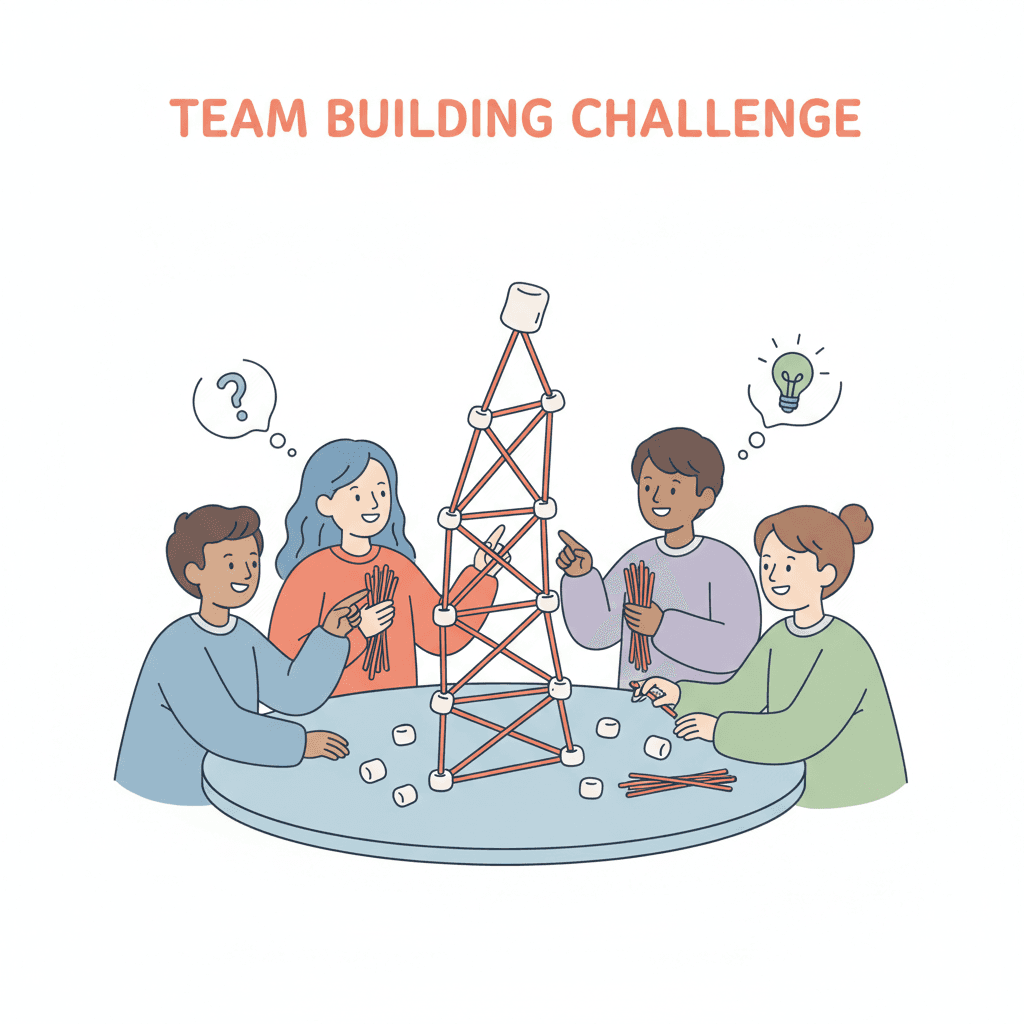
4. The Marshmallow Challenge
The Materials: 20 sticks of spaghetti, one yard of tape, one yard of string, one marshmallow.
Teams have 18 minutes to build the tallest free-standing structure that can support the marshmallow on top. This is a classic lesson in prototyping, testing, and collaboration.
5. The Egg Drop
The Challenge: Protect an egg from a high fall.
Give teams identical sets of materials (straws, tape, paper, balloons). They must design a contraption to protect a raw egg when dropped from a height (e.g., top of a playground slide). This encourages engineering thinking and group decision-making.
6. Blind Retriever
The Challenge: Guide a blindfolded teammate.
One member is blindfolded. The rest of the team must guide them to retrieve a specific object in the "minefield" (classroom obstacle course) using only verbal instructions. To make it harder, allow only one person to speak at a time.
High School: Trust & Communication
Deeper activities for mature students.
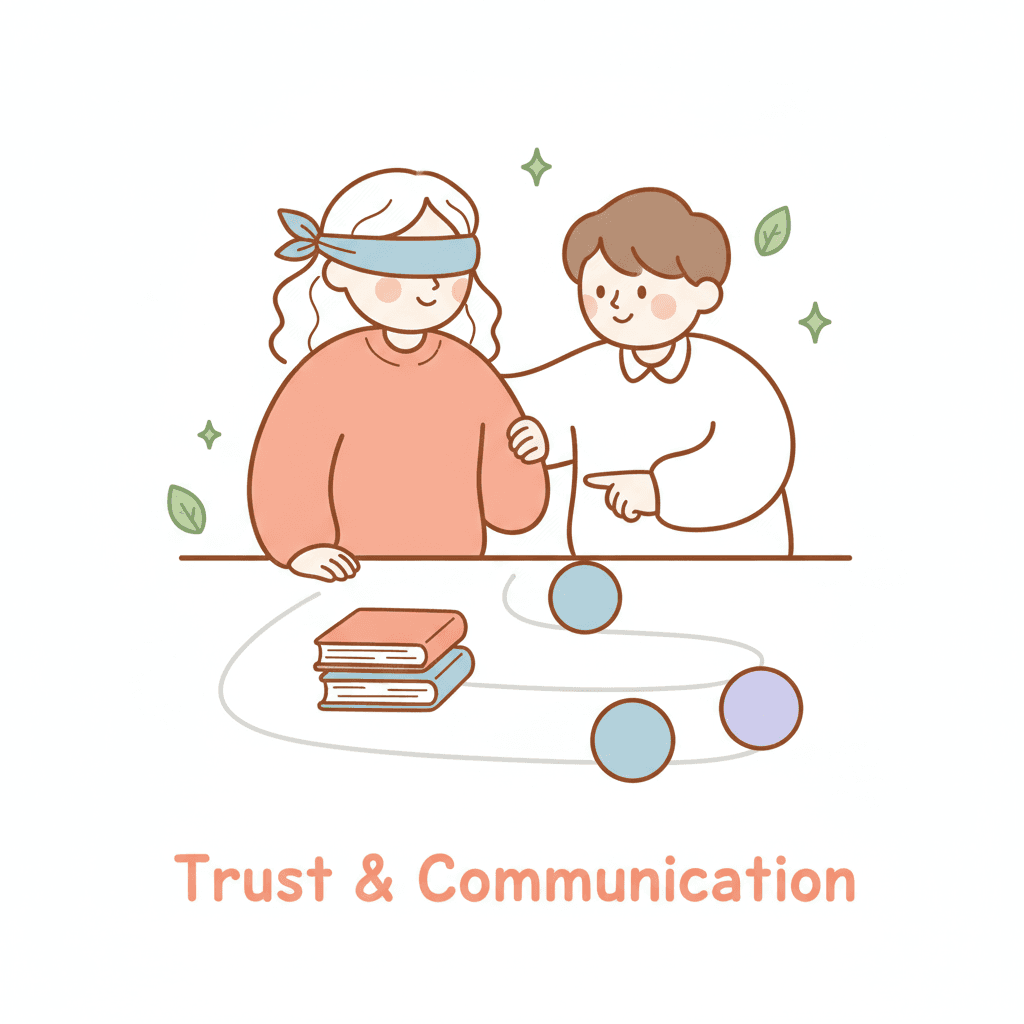
7. Minefield
The Setup: Scatter objects (paper, books, balls) across an open area.
Students pair up. One is blindfolded. The partner must stand at the finish line and shout directions to guide their blindfolded partner through the minefield without touching any objects. If multiple pairs go at once, it simulates the chaos of real-world communication.
8. Zoom (The Book)
The Challenge: Order a story without seeing the whole picture.
Based on the book Zoom by Istvan Banyai. Distribute sequential pictures (pages from the book) to students. They cannot show their picture to anyone else but can describe it. The class must arrange themselves in the correct narrative order based solely on descriptions.
9. Shark Tank Pitch
The Challenge: Invent and sell a product.
Teams have 30 minutes to invent a product that solves a specific classroom problem (e.g., "boring homework"). They must create a prototype, a brand name, and a 2-minute pitch to present to the "investors" (teachers or other students).
The Most Important Part: The Debrief
A team building activity without a debrief is just a game. To make the learning stick, spend 5-10 minutes discussing what happened.
Questions to Ask:
- • What was the hardest part of working together?
- • Did anyone take on a leadership role? How did that happen?
- • How did you handle disagreements?
- • If you could do it again, what would you change?
- • How does this activity relate to working on a group project or in real life?
Conclusion
Integrating these activities into your curriculum helps build a classroom culture where students feel safe, valued, and connected. When students trust each other, they are more willing to participate, take intellectual risks, and support one another's learning journey.
For more ways to bring your class together, check out our collection of fun icebreaker questions for students.
Ready to Break the Ice?
Take your team meetings to the next level with our premium Icebreaker Bingo Kit. Generate unlimited, custom-branded bingo cards in seconds.
Instant access • No subscription required